Are natural, aluminium-free deodorants really better for you?
Advert
Wellness
Are natural, aluminium-free deodorants really better for yous?
Much of the marketing suggests that they're safer than more traditional underarm products, but that hype is non based on science.
(Art: Tyler Comrie/The New York Times)
Google "natural deodorant" and you'll find endless articles detailing all the reasons you should buy them. Some merits that the aluminium in most conventional antiperspirants tin lead to Alzheimer'southward disease or cancer. Others assert that certain ingredients in traditional deodorants and antiperspirants are "toxic" or that they can kill off the "good" bacteria in your armpits.
Many natural deodorant companies have seized on these perceptions, implying in their marketing that the ingredients in conventional deodorants are the stuff you don't want", and that what you practise want is their "natural" product that is made from "establish- and mineral-based odour fighters" and "make clean ingredients."
Just experts, including an oncologist, an epidemiologist, a skin microbiome practiced and several dermatologists, said that there is no definitive evidence that regular deodorants or antiperspirants are worse for your wellness than natural deodorants. In fact, they said, they're perfectly safety.
And while natural deodorants might contain seemingly healthier ingredients than your conventional drugstore antiperspirant, they can still have substances that might irritate your skin. In the end, the experts said, the way a deodorant makes you feel (and smell) should guide your determination to use it.
ARE NATURAL DEODORANTS Better FOR YOU?
No. One of the biggest and well-nigh alarming fake claims made well-nigh conventional antiperspirants is that they cause breast cancer – a rumour that began with an email chain letter of the alphabet from the 1990s.
It said that antiperspirants, which minimise perspiration by blocking sweat ducts, prevent the armpit area from "purging toxins", which could build upwards in "the lymph nodes below the arms" and cause cell mutations and ultimately breast cancer. The letter also claimed that razor nicks from shaving could farther increase breast cancer run a risk by assuasive chemicals from antiperspirants to enter the body.
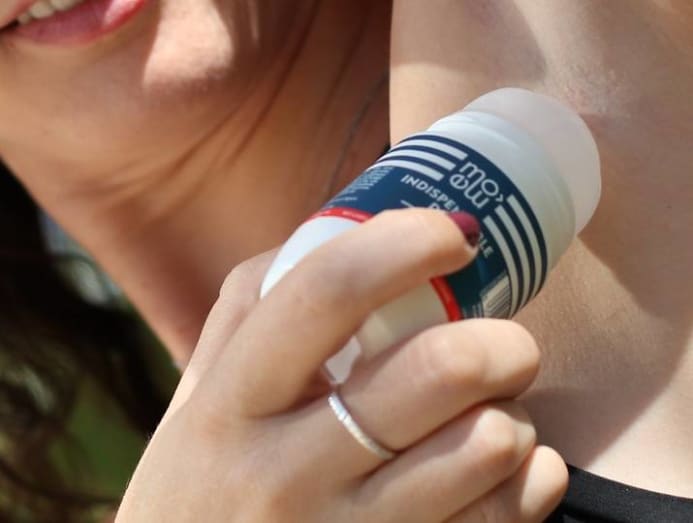
This, say experts – including those from the American Cancer Society – is false. "To engagement, in that location's absolutely no evidence that breast cancer is caused past exposure to anything in antiperspirants or deodorants, total stop," said Dr Harold Burstein, a breast oncologist at the Dana-Farber Cancer Institute and professor of medicine at Harvard Medical School.
The same goes for another cancer-related rumour, which is that the aluminium from antiperspirants could be absorbed into the skin and increase breast cancer risk by altering chest cell oestrogen receptors. Again, Dr Burstein said, the evidence just isn't there to support this idea.
To date, in that location'due south absolutely no evidence that chest cancer is acquired past exposure to anything in antiperspirants or deodorants, full stop.
"The well-done human studies accept really never suggested this," he said, and the studies that take were often performed on animals or cells (like breast cancer cells in a petri dish) and used "unbelievably toxic levels" of the ingredients they were testing.
Anyhow, Dr Burstein added, only a minuscule fraction of aluminium can be absorbed through the pare, so your exposure to it from an antiperspirant is trivial.
In that location'southward likewise been concern derived from decades-former research that found that Alzheimer's patients' brains had loftier levels of aluminium. This suggested that the metal – peradventure not merely from antiperspirants, merely also from other personal care and household products like pots and pans – could be a potential take chances factor for this degenerative disease.
READ: What does happiness smell like? How certain scents can lift your spirits
But scientists now disregard the thought that aluminium tin cause Alzheimer's. "The evidence is of poor quality, generally speaking," said Amy Borenstein, a professor of epidemiology at the Academy of California, San Diego, who studies the causes of Alzheimer'due south disease. "The whole topic has kind of been abased."
She did annotation that the link between aluminium and Alzheimer's is challenging to study considering aluminium is the third-most mutual element in the Earth'south chaff, which means that anybody is exposed to it in small quantities.
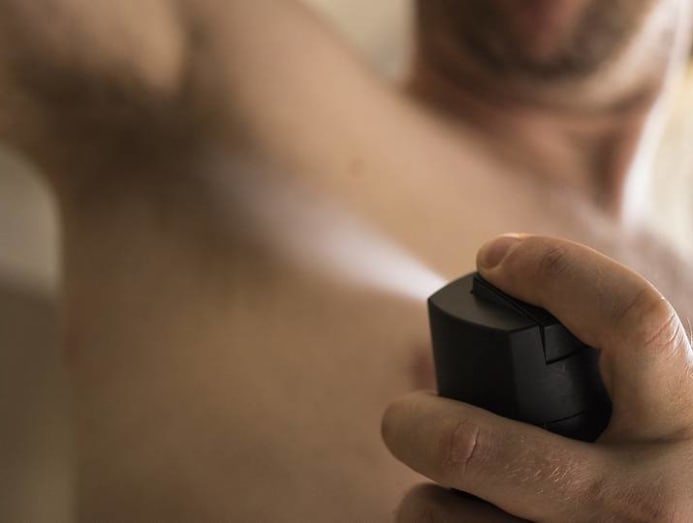
"We believe information technology's important for people to take choices to find the everyday products that are right for them," said Justin Boudrow, a spokesman for Tom's of Maine, which makes a multifariousness of natural personal intendance products including toothpastes, mouthwashes, soaps and underarm products.
"This is why we offer natural deodorants without aluminium that provide odour protection, every bit well as antiperspirants that practice comprise aluminum for wetness protection."
ARE NATURAL DEODORANTS GOOD FOR YOUR MICROBIOME?
There isn't plenty bear witness to show that they are. There have been claims that regular deodorants and antiperspirants tin disrupt or impale off the "good" bacteria living in your armpits, leading to peel irritation, redness, bumps and overall poor peel health.
Some natural deodorant brands have marketed their products equally "microbiome friendly", claiming that they're not only practiced for the health of your peel, just also minimise odour by promoting the growth of "skilful" bacteria.
READ: The weird and wonderful world of male preparation (and shiny legs)
But Jack Gilbert, a pare microbiology expert at the University of California, San Diego, said that he wasn't aware of any rigorous studies that have borne this out. "There's a lot of associative work, but nothing that definitively links deodorant or antiperspirant disruption of the skin microbiome to pare health."
ARE THE INGREDIENTS IN NATURAL DEODORANTS Meliorate THAN THOSE IN TRADITIONAL ONES?
No. Just because a deodorant is labelled "natural" doesn't mean it won't incorporate any problematic ingredients itself. In fact, the term "natural" has no regulatory definition, so its labelling on personal care products is essentially meaningless.
"You tin get irritation or allergic rashes, and that's far and away the more than mutual wellness issue seen with deodorants – all deodorants, whether traditional or natural," said Dr Jennifer Chen, a clinical associate professor of dermatology at Stanford Medicine.
The most common effect with deodorant is irritant contact dermatitis or pare irritation, Dr Chen said, which "ordinarily can't be pinned downward to a specific ingredient, even though some ingredients are more than irritating than others".
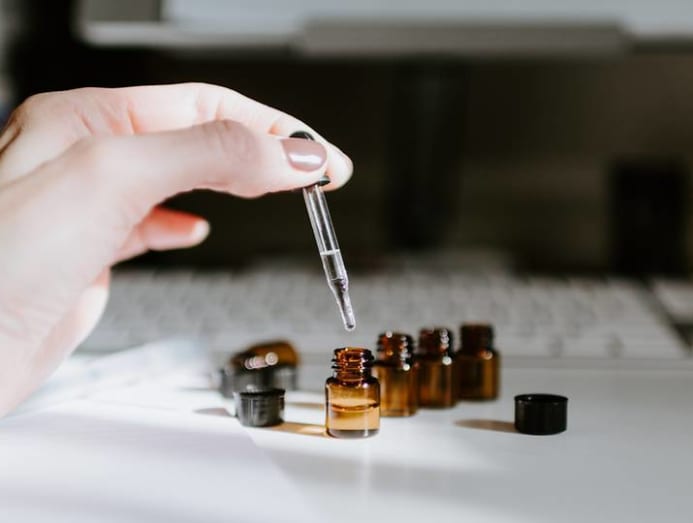
The nearly troublesome ingredient in whatever kind of deodorant or antiperspirant, whether it's "natural" or not, is fragrance, said Dr Nina Botto, an associate professor of dermatology at the Academy of California, San Francisco. This includes essential oils, which many natural deodorant brands play upward in their marketing.
"Botanicals, plant extracts and essential oils are often touted equally having wellness benefits," Dr Botto said. "But those natural components actually cause a lot of health problems and trouble for the peel."
The combination of the underarm'southward thin, folding skin, pilus follicles and moist environment makes this area of the body more susceptible to irritation or an allergic reaction compared to, say, if you put deodorant on your back.
A lot of the claims that one product is better than another are just marketing claims that are non based on scientific prove.
In fact, Dr Chen noted, one study on fragrance allergies found that amid many of the scented personal care products tested – like scented deodorants, lotions, shampoos, shaving creams and hair dyes – the deodorants caused the near cases of allergic contact dermatitis, a skin rash caused by contact with an allergen.
Dr Botto said that while she however sees allergic reactions to synthetic fragrances, she's been getting more and more patients who are dealing with allergic contact dermatitis afterwards using products with natural fragrance, like those containing linalool and limonene – natural compounds extracted from certain plants, like citrus fruit peels, which are commonly used in natural deodorants.
READ: Men: Very handy advice on picking a olfactory property that women will love on you
Even worse, "a lot of times you'll see that someone gets a rash with a natural deodorant and they'll put on balms and other 'natural' remedies that contain more of the same ingredients", Dr Botto said. "It'due south kind of similar calculation gasoline to a fire."
She noted that such rashes can besides cause breaks in the skin, which tin then lead to infection. "Information technology tin can exist a real mess," she said.
DOES NATURAL DEODORANT Fifty-fifty Piece of work?
The experts said they weren't aware of whatever studies that reliably looked into how well natural deodorants work. Simply the way they're formulated tin can offering clues.
Because regular and natural deodorants don't contain aluminium (which is what helps antiperspirants minimise sweating) they typically rely on ingredients like fragrances and baking soda to mask trunk odour. This means that natural deodorants generally should role as well as regular deodorants practise in terms of keeping you fresh.
However, while the experts were not aware of any rigorous, caput-to-head studies comparing the efficacy of natural deodorants versus antiperspirants, it stands to reason that they may not counteract smell in the same way that an antiperspirant does.
"Leaner are stimulated to grow past the available h2o and nutrients found in sweat," Dr Gilbert said. "So antiperspirant is getting to the principal route of the odour problem."
Dr Arielle Nagler, an assistant professor of dermatology at the NYU Grossman School of Medicine, said that the effectiveness of a product volition likewise depend on how information technology interacts with your ain biological science. "Anybody smells a little bit different," she said, which depends on how much yous sweat and what kinds of bacteria are on your body.
SHOULD I Buy NATURAL DEODORANT OR NOT?
Natural deodorant is not better or worse for your health than traditional deodorant or antiperspirant. "A lot of the claims that one production is better than another are just marketing claims that are not based on scientific evidence," Dr Chen said. "I don't retrieve there's any proof that one is safer than another."
The Personal Care Products Council, an industry group that represents cosmetic and personal care product companies, echoed a view from Dr Chen and other experts, which is that people should make their option based on personal preference.
READ: No time to expect your best? These are multi-tasking training products for the lazy man
"Our members work to ensure consumers have access to an array of prophylactic and constructive products that assist meet the differing needs for themselves and their families," the council said in a statement provided to The New York Times. "This includes offering 'natural' products for those consumers who prefer them. It's all about consumer choice."
Still, dermatologists practice recommend fragrance-complimentary options, especially if y'all are allergic or sensitive to fragrance. "The more than exposure i has to some of these fragrance chemicals, the more at risk y'all are for potentially developing an allergy," Dr Botto said.
If you enjoy using scented deodorants, though, "that'south fine," she added, "but particularly if you have any sort of skin sensitivity, it's a take chances."
Or, you could only choose non to wear deodorant at all.
By Annie Sneed © The New York Times
This article originally appeared in The New York Times.
https://www.nytimes.com/2021/06/09/well/live/natural-deodorant-questions.html

0 Response to "Are natural, aluminium-free deodorants really better for you?"
Post a Comment